
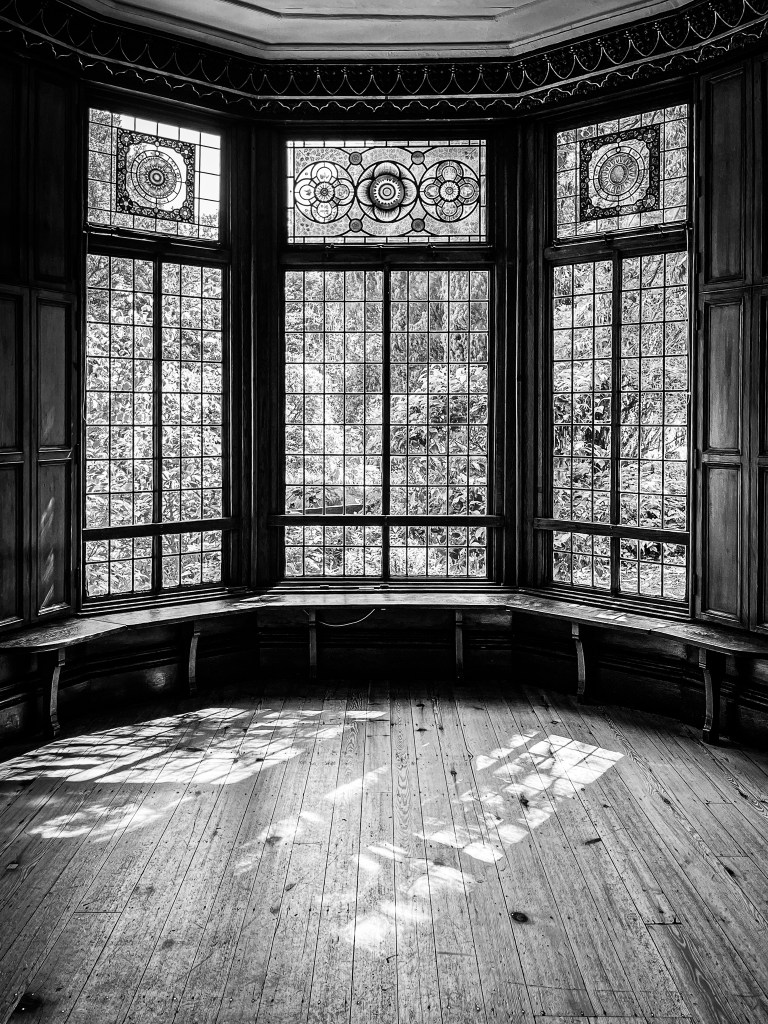
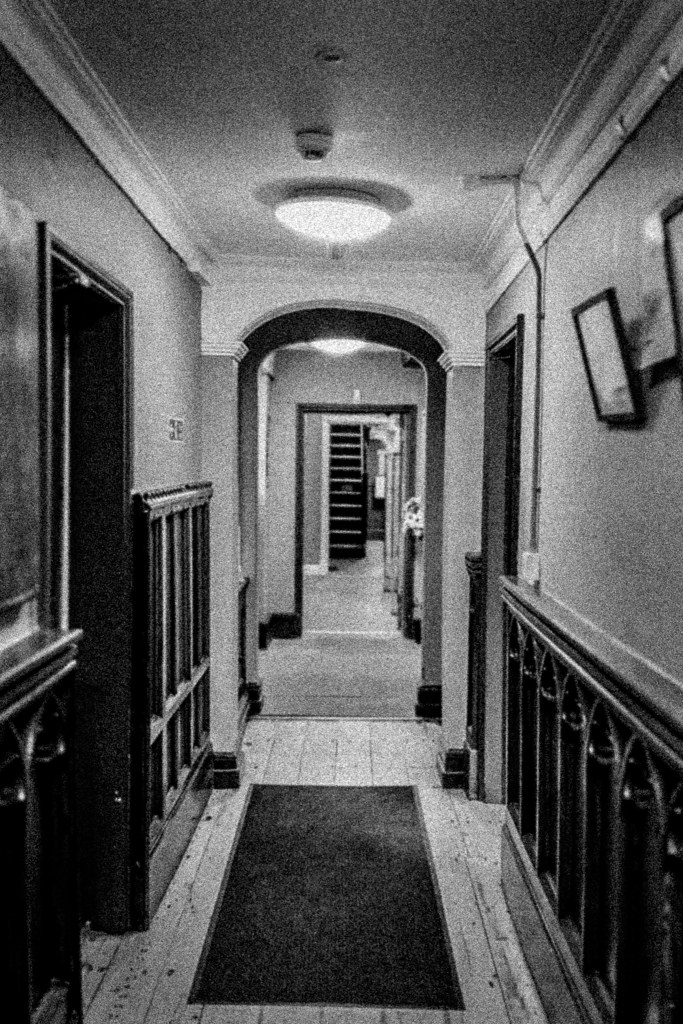
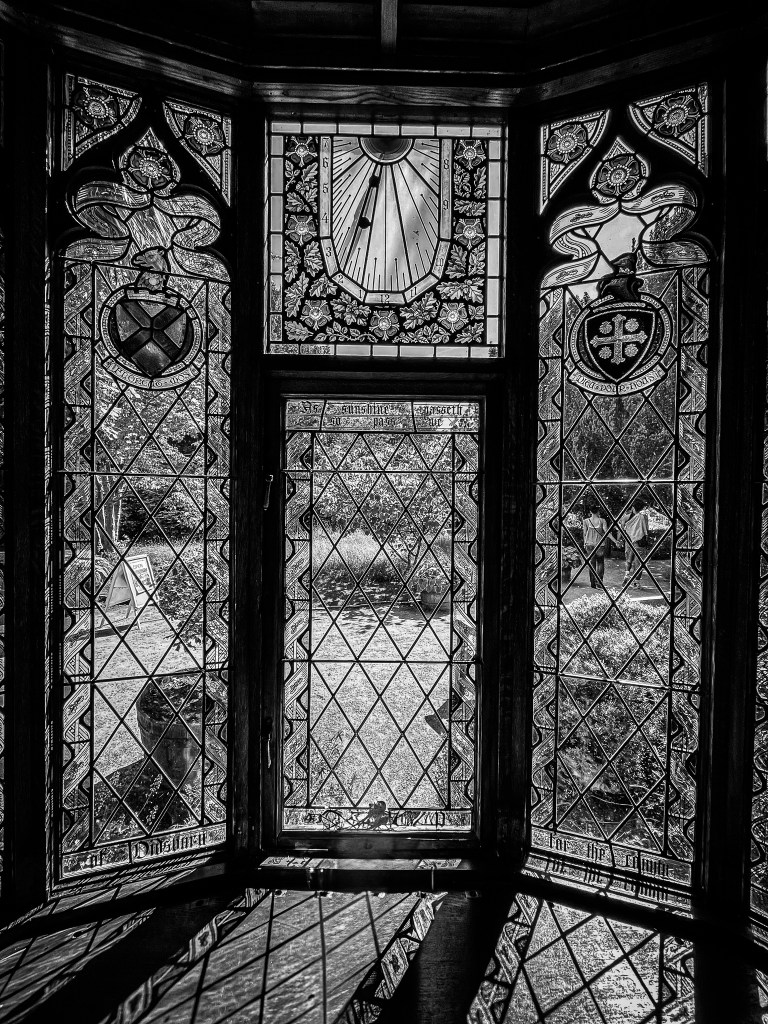


Tucked just behind the gates on Stenner Lane, The Old Parsonage is one of the oldest surviving buildings in Didsbury—possibly second only to the neighbouring St James’ Church. It dates in part to at least 1646, when it was known as Ash House and referred to as “the home of the minister.” Its exact origins are difficult to trace—no deeds exist for many of the village’s early buildings—but it was likely once part of the original clerical estate, with later additions and renovations through the 18th and 19th centuries.

By the mid-1800s, it had acquired a curious reputation. A place of charm and antiquity, yes—but also one shunned by tenants and whispered about for its ghostly reputation. Its reputation for being haunted was not merely a village rumour, but something that would come to define its history—and the writing of its most famous occupant, Fletcher Moss, who moved in with his family in 1865.

The Parson Who Fled
Before Moss, the house was let to the Reverend W. J. Kidd, a controversial figure known for quarrelling with parishioners at both Didsbury and his former post at St Matthew’s. Though appointed to the house as part of his role, he refused to live there. He complained “constantly of the ghosts and other troubles,” and preferred to reside in a newer rectory at Didsbury Park. It was, Moss wrote, “the parson who fled, not the ghosts.”
Accounts suggest that no servant would remain in the house during Kidd’s tenancy, and that the place gained a serious reputation for being “unliveable.” Tales circulated of phantoms wandering the upper floors, of bells ringing in the night, and of apparitions seen in the garden—possibly emerging from the neighbouring churchyard. When the reverend moved on, other tenants made brief attempts to inhabit the house, only to leave soon after.

By the time the Moss family arrived, the building had fallen into disrepair. Yet rather than flinch from its haunted reputation, Fletcher Moss embraced it—describing the ghost stories with a mixture of humour, scepticism, and affection. He would go on to preserve not only the building but its legends, recording the strange experiences of his youth in works such as Folk-lore, old customs and tales of my neighbours and Fifty Years Public Work in Didsbury.
Noises in the Night
From the moment the Moss family moved in, disturbances began. “Probably hundreds of times I have been awakened out of sleep,” Moss wrote, “and heard someone coming upstairs, stealthily and quietly, step by step; heard the doors open and shut; have gone after them and found nothing.” These incidents were frequent, and yet always elusive—without form or face.
The source of some of the commotion could be pinned on mundane causes: cracked panes, loose bell wires, or the ever-present rats that invaded from the adjoining stables. Moss’s writing blends these everyday explanations with a sense of amused resignation. Even a screaming spectre in his mother’s room—later revealed to be a sliver of cracked glass catching the wind—becomes the stuff of comic horror.
Yet not everything could be so easily explained. “There may be something light, there may be a waft of chilled air,” he conceded, “but there is nothing tangible.”

“In the Witching Hour of Night…”
For all his scepticism, Moss did not deny the presence of something. His beloved dogs—terriers, bristling with energy and instinct—regularly barked at nothing, growled into corners, and followed invisible presences with their eyes. “The dogs know when the ghosts are about,” Moss noted. “We used to have them in the house until they became a greater nuisance than the ghosts themselves.”
Though the stories carry humour, they hint at a deeper belief that something unseen still passed through the old rooms. The Reverend Kidd may have run from it, but Moss endured it with a certain fondness, writing:
“In the witching hour of night the ghosts still come and go.
I know nothing about them—what they want, or whither they go.
They will not hurt us, and we never heed them.”

Even as he aged, Moss remained pragmatic, allowing the ghosts their quiet procession while the life of the house carried on around them. They were, to him, part of the fabric of the place—not to be exorcised or explained away, but simply acknowledged, and occasionally recorded.
Restoration and Relics
Though haunted in reputation, the Old Parsonage became a haven in Fletcher Moss’s hands. When he and his parents arrived in 1865, the house was in a sorry state—half-abandoned, its gardens overrun, its reputation unsettled by tales of ghostly visitors and servants who refused to stay the night. Over time, Moss transformed it into both a home and a living museum of local history.

He filled its rooms with artefacts collected from across the region: wood panelling from Standon Hall, stalls from Barlow Church, and clocks and chairs acquired at a fraction of the price paid by grander estates. One of the house’s most striking features, the Eagle Gate on Stenner Lane, was salvaged from the demolition of Manchester’s Spread Eagle Hotel in 1902. Moss had owned the land the hotel stood on, and when it came down, he paid £10 for the gate—and eight times that to have it re-erected outside his home.
Elsewhere, he added personal touches: Lebanese cedar trees, mistletoe, and a small cemetery for his dogs, tucked near the yew tree in the gardens. He even had a marker placed for his horse, Molly—though she is not, by his own admission, buried there. These oddities reflect Moss’s romantic temperament, his interest in memory and place, and a Victorian fondness for curating the past.
To Moss, the house was more than a home. It was a statement—about Didsbury, about time, and about the kind of quiet continuity that survives even as the world changes around it.


