
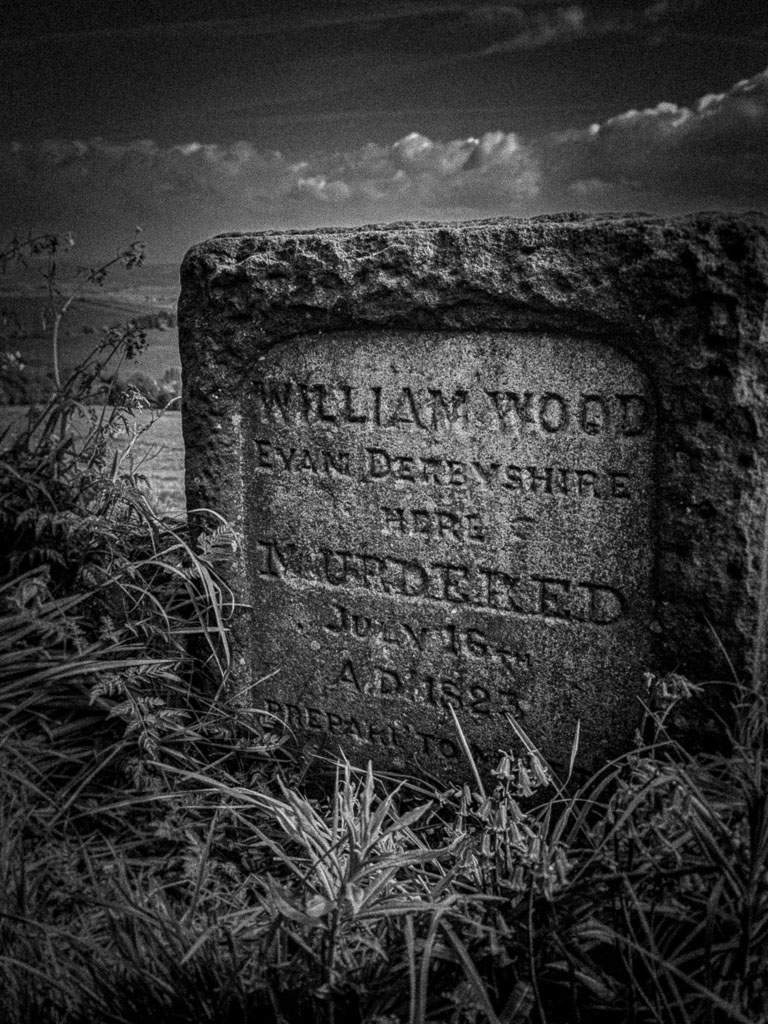


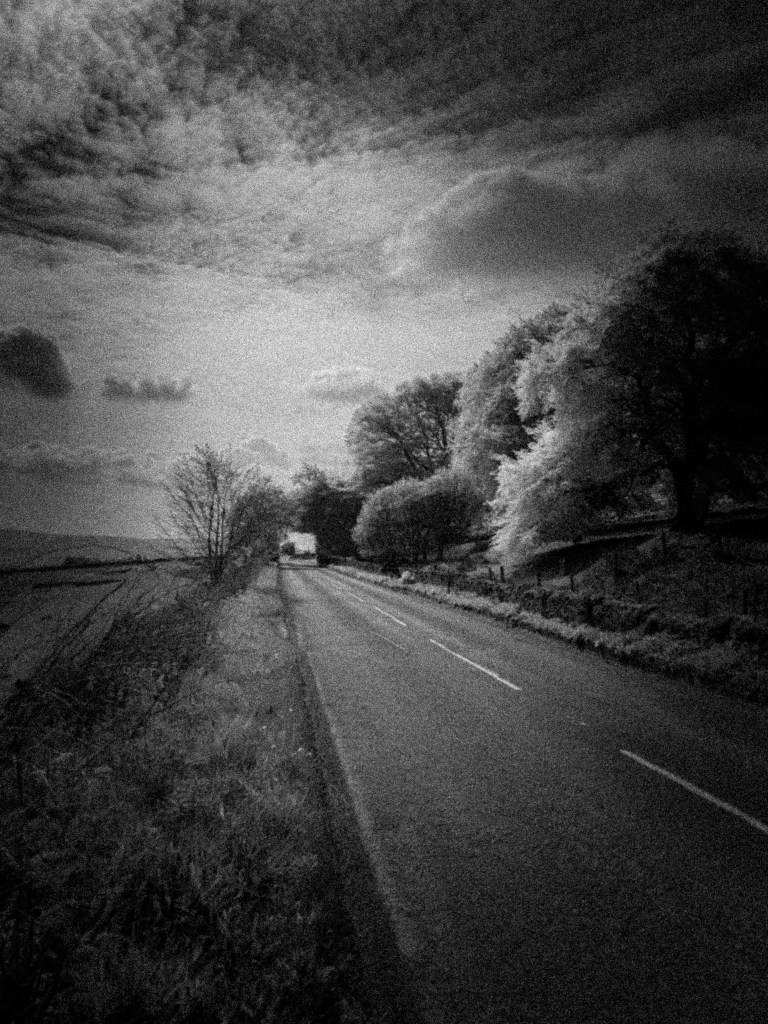
At the roadside on the old Buxton road above Whaley Bridge, just before the road crests at Stoneheads, a carved stone stands quietly in the verge. Its message is blunt:
WILLIAM WOOD
EYAM, DERBYSHIRE
HERE
MURDERED
JULY 16TH
A.D. 1823.
PREPARE TO MEET THY GOD.
For over two centuries it has stood as a marker of a brutal and unsolved wrong. The ground beneath it has long been thought cursed.
The 1823 Murder
On 15 July 1823, William Wood, a 30-year-old cattle dealer from Eyam, was making his way home on foot from Manchester market. He stopped at a public house in How Lane, most likely High Lane near Disley, where he was observed by several patrons including three men dressed in sailor’s clothes. After Wood left, the three followed, heading along the same road in the direction of Whaley Bridge.
The following morning, around seven o’clock, a passing carter found Wood’s body at the roadside between Disley and Whaley Bridge, buried under a pile of stones pulled from the wall. His head had been beaten severely, his pockets turned out. A large number of bloodied stones were brought with the body to the Cock Inn, where the coroner’s jury convened.
Wood was a married man with three children. He had received a large sum in Manchester that day and, though he had paid off several accounts en route, was believed to still be carrying a considerable amount at the time of the attack.
Of the three suspects, one, Joseph Dale, was eventually caught and hanged at Boughton in April 1824. Another allegedly died by suicide in his cell. The third was never identified.
The Hollow That Wouldn’t Fill
What gives this story its folkloric dimension is the legend of the hollow where Wood’s head fell. Locals said that grass refused to grow in it. Stones thrown in were found scattered by morning. A man named John Fox, who lived nearby in the 1890s, tried repeatedly to fill the hollow with packed earth, sods, and gravel. Each time, the contents were gone by the following day.
Fox also described seeing what appeared to be a linen jacket draped over the wall nearby. When he moved to collect it, it vanished. On another occasion he felt a rush of air pass close with the sound of beating wings.
Alfred Fryer, author of Wilmslow Graves, visited the spot many times and reported the same phenomenon: a hollow that resisted all attempts to be filled. In all his visits, he found only a single small stone resting within it.
Sceptics have suggested a practical explanation, that the ground sits slightly below road level and rainwater runoff does the clearing. Whether that accounts for everything Fox experienced is another matter.


